Luxor and Aswan: What to See and Do
The temples and tombs of Luxor, the islands and Nubian villages of Aswan, Abu Simbel, and how many days each city deserves.
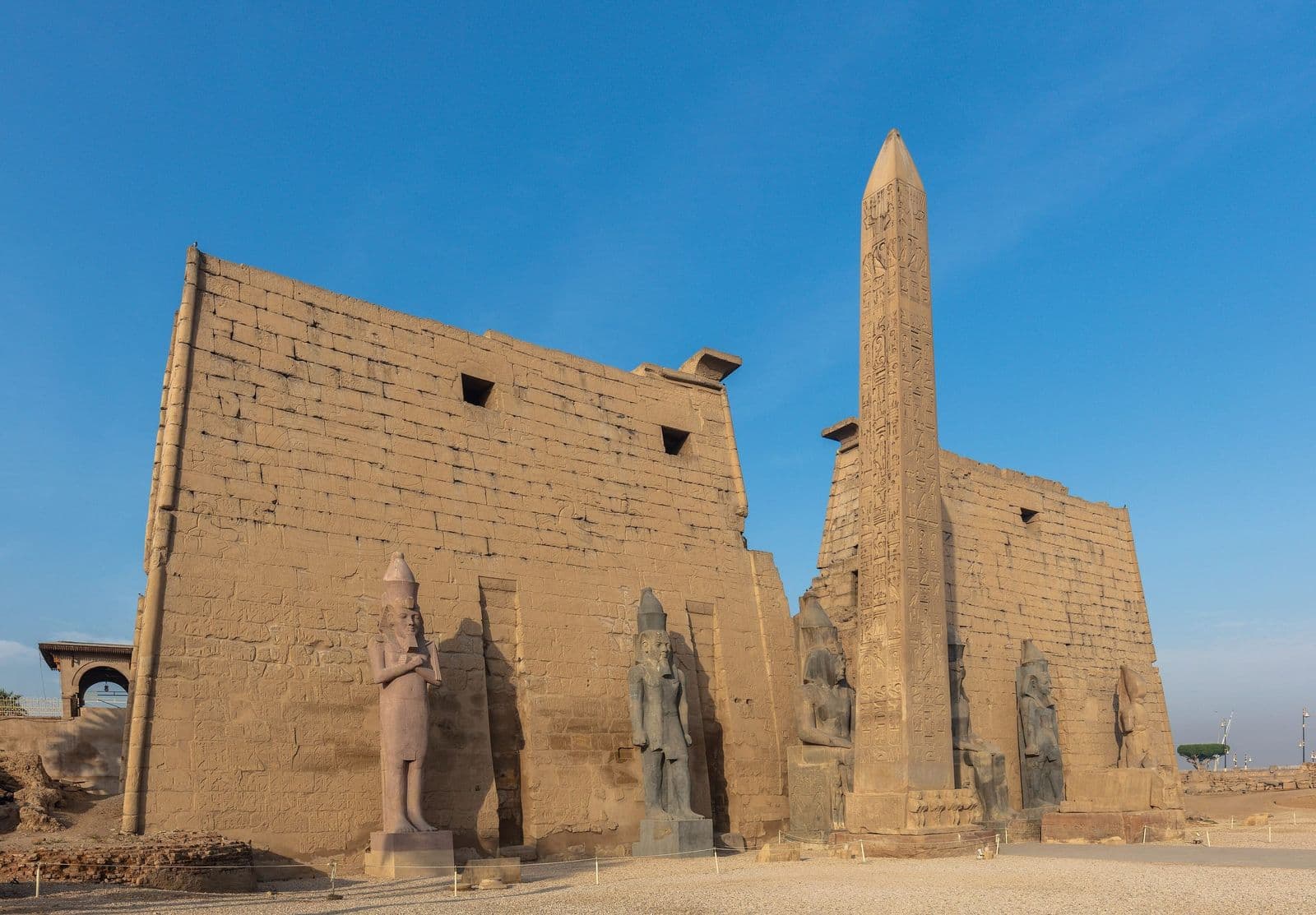
If Cairo is the gateway to Egypt, Luxor and Aswan are its heart. Luxor holds more ancient monuments than almost anywhere on earth, from the colossal temple of Karnak to the painted tombs of the Valley of the Kings. Aswan, three hours upriver, is softer and slower, with granite islands, sailing boats and Nubian villages. Together they make the core of any Nile journey.
Luxor: the East Bank
Ancient Thebes was divided by the river. The East Bank, where the sun rises, was the land of the living and of the great temples.
Karnak Temple
Karnak is not one temple but a vast complex built and rebuilt over some two thousand years. Its Great Hypostyle Hall, a forest of giant columns carved with scenes and hieroglyphs, is one of the most astonishing spaces in the ancient world. Give it at least two hours with a guide.
Luxor Temple
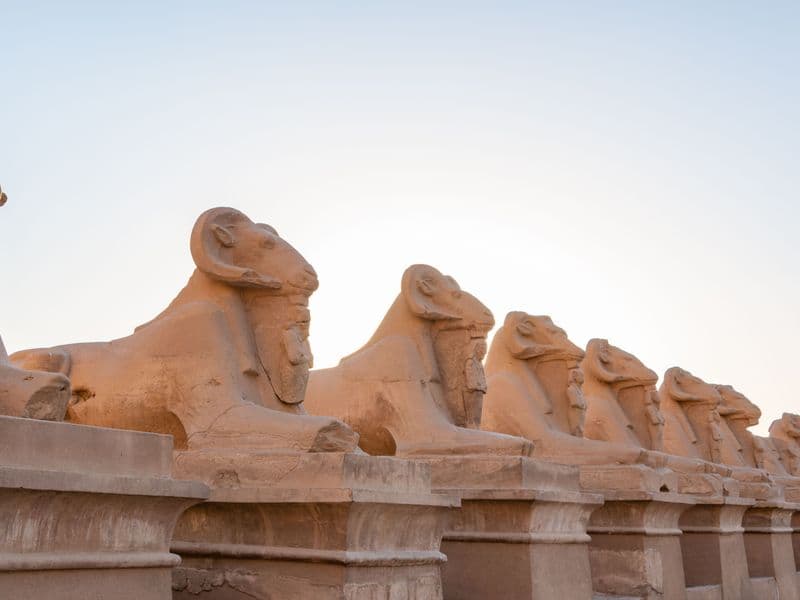
In the heart of town, Luxor Temple is beautiful in the late afternoon and after dark, when it is lit up. It was once linked to Karnak by an avenue of sphinxes, now restored for long stretches. It makes a peaceful end to a busy day.
Luxor: the West Bank
The West Bank, where the sun sets, was the land of the dead, and it is where the pharaohs built their tombs and memorial temples.
- The Valley of the Kings: tombs cut deep into the hills, with brilliantly painted walls. Your ticket includes a set number of tombs, and some special tombs need an extra ticket. Your guide will help you choose.
- The Temple of Hatshepsut: a striking terraced temple built for one of Egypt's few female pharaohs, set against the cliffs.
- The Colossi of Memnon: two giant seated statues that once guarded a temple.
- Medinet Habu and the Valley of the Queens, if you have time, both quieter and beautifully preserved.
Our Luxor East & West Bank Full Day covers the highlights of both banks.
A sunrise balloon flight
Many travelers say a sunrise hot air balloon over the West Bank is the most magical hour of their trip. You float over temples, villages and green fields as the sun comes up. It is an early start and flights depend on the weather, so it is best planned with a spare morning.
Between Luxor and Aswan: Edfu and Kom Ombo
If you travel by Nile cruise, you will stop at two remarkable temples on the way:
- Edfu, dedicated to the falcon god Horus, one of the best-preserved temples in Egypt.
- Kom Ombo, a rare double temple for Sobek, the crocodile god, and Horus, right on the riverbank, with a small crocodile museum.
Aswan: islands, sails and Nubia
Aswan feels different from the rest of Egypt. The river is wider and dotted with granite boulders and islands, feluccas glide past, and the Nubian culture of the south gives the city its own colours and music.
- Philae Temple, dedicated to Isis, was moved stone by stone to a new island when the High Dam was built. You reach it by a short boat ride.
- The High Dam and the Unfinished Obelisk, which tell the modern and ancient stories of Aswan.
- A felucca sail around Elephantine and Kitchener's Island in the late afternoon.
- A Nubian village, with brightly painted houses and a warm welcome; see our Nubian Village & Felucca Afternoon.
Our Aswan Highlights day brings together Philae, the High Dam and the obelisk.
Abu Simbel
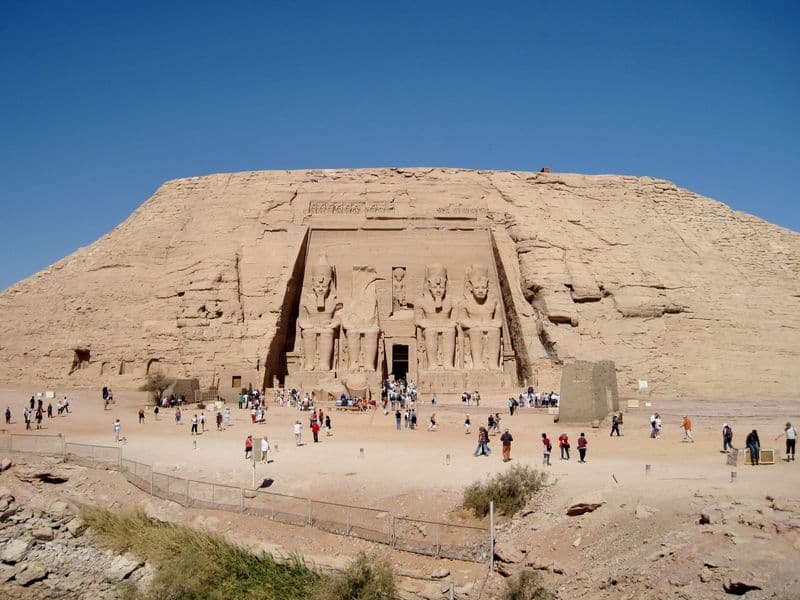
South of Aswan, near the border with Sudan, Ramses II carved two enormous temples into the rock, with four seated colossi at the entrance of the Great Temple. Like Philae, they were moved to save them from Lake Nasser. Twice a year, around 22 February and 22 October, the rising sun reaches the inner sanctuary.
You can reach Abu Simbel by road from Aswan, a long but rewarding day; see Abu Simbel by road. There is also the option to fly from Cairo, or to sail Lake Nasser on a Lake Nasser cruise.
How many days?
- Luxor: two full days to see both banks without rushing; three if you add the balloon, Dendera and Abydos.
- Aswan: one to two days, plus a day for Abu Simbel.
- By cruise: a 3 or 4-night cruise covers both cities and Edfu and Kom Ombo. Read our Nile Cruise Guide.
Dendera and Abydos
If you have an extra day in Luxor, the temples of Dendera and Abydos to the north are among the most beautiful in Egypt and far quieter than Karnak. Dendera's Temple of Hathor has a ceiling still painted in deep blue with stars and the sky goddess Nut. Abydos, sacred to Osiris, has some of the finest carved reliefs of the New Kingdom and the famous list of kings. It is a long but rewarding day out; see our Dendera & Abydos day.
Getting between Luxor and Aswan
You have three good ways to travel the stretch of river between the two cities:
- By Nile cruise, the most popular choice, with Edfu and Kom Ombo along the way.
- By road, a few hours in a private car, stopping at Edfu and Kom Ombo if you like.
- By dahabiya, a traditional sailing boat that takes several days and stops at smaller villages and sites.
If you prefer to stay in hotels, a private car is the most flexible option and lets you visit the temples on the way.
Where to stay
Both cities have lovely hotels by the river. In Luxor, many travelers enjoy staying on the East Bank close to Luxor Temple and the corniche, while a West Bank hotel gives quiet village views and easy access to the tombs. In Aswan, a hotel with a terrace over the river and the islands is hard to beat for sunset. If you sail, your cruise ship is your hotel and moves with you.
Luxor and Aswan from the Red Sea
If you are staying in Hurghada, you can still see Luxor on a long day trip by road; see our Luxor Day Trip from Hurghada. Cruise passengers arriving at Safaga can do the same with our Luxor Highlights from Safaga Port. For a more relaxed visit, an overnight stay lets you see both banks without rushing.
A suggested plan
- Day 1 in Luxor: the East Bank, with Karnak in the morning and Luxor Temple at sunset.
- Day 2 in Luxor: the West Bank, starting early at the Valley of the Kings, then Hatshepsut's temple and the Colossi of Memnon.
- Day 3: travel south by cruise or car, visiting Edfu and Kom Ombo.
- Day 4 in Aswan: Philae Temple, the High Dam and a felucca sail to a Nubian village.
- Day 5: Abu Simbel, by road or by air, before flying on.
This plan suits most travelers, and every part of it can be slowed down. Many people add a rest day in Aswan, where the pace of life makes it easy to relax.
Tips for Upper Egypt
- It is hotter here than in Cairo, especially from May to September. Start early and rest at midday.
- Tombs have steps and slopes; tell your planner about any mobility concerns.
- Photography rules in tombs vary; your guide will tell you what is allowed.
- Bring a light scarf or layer for cool mornings on deck in winter.
Plan your Luxor and Aswan days with a private guide, or browse our Nile cruises.
Questions travelers ask
How many days do I need in Luxor and Aswan?
Two full days in Luxor and one to two in Aswan, plus a day for Abu Simbel. A 3 or 4-night Nile cruise covers both cities and the temples in between.
Is a Nile cruise or a hotel better for Luxor and Aswan?
A cruise is the easiest way to see both cities and Edfu and Kom Ombo without repacking. A hotel stay gives you more flexibility and time in each city.
Is the Luxor hot-air balloon worth it?
For many travelers it is a highlight: a sunrise flight over the West Bank temples and fields. It means a very early start and depends on the weather.
Trips that fit this guide
 Full day · Day tour
Luxor East & West Bank Full Day
From $80 per person
 Full day · Day tour
Aswan Highlights: Philae, High Dam & Obelisk
From $55 per person
 Full day · Day tour
Abu Simbel Temples by Road from Aswan
From $135 per person
Want this planned for you?
Tell us your dates and what you love. We are available 24/7.